
How to Care for Sourdough Starter Without Making It Weird
A practical note on feeding Ophelia, baking with her, and what it looks like to grow a starter from scratch.
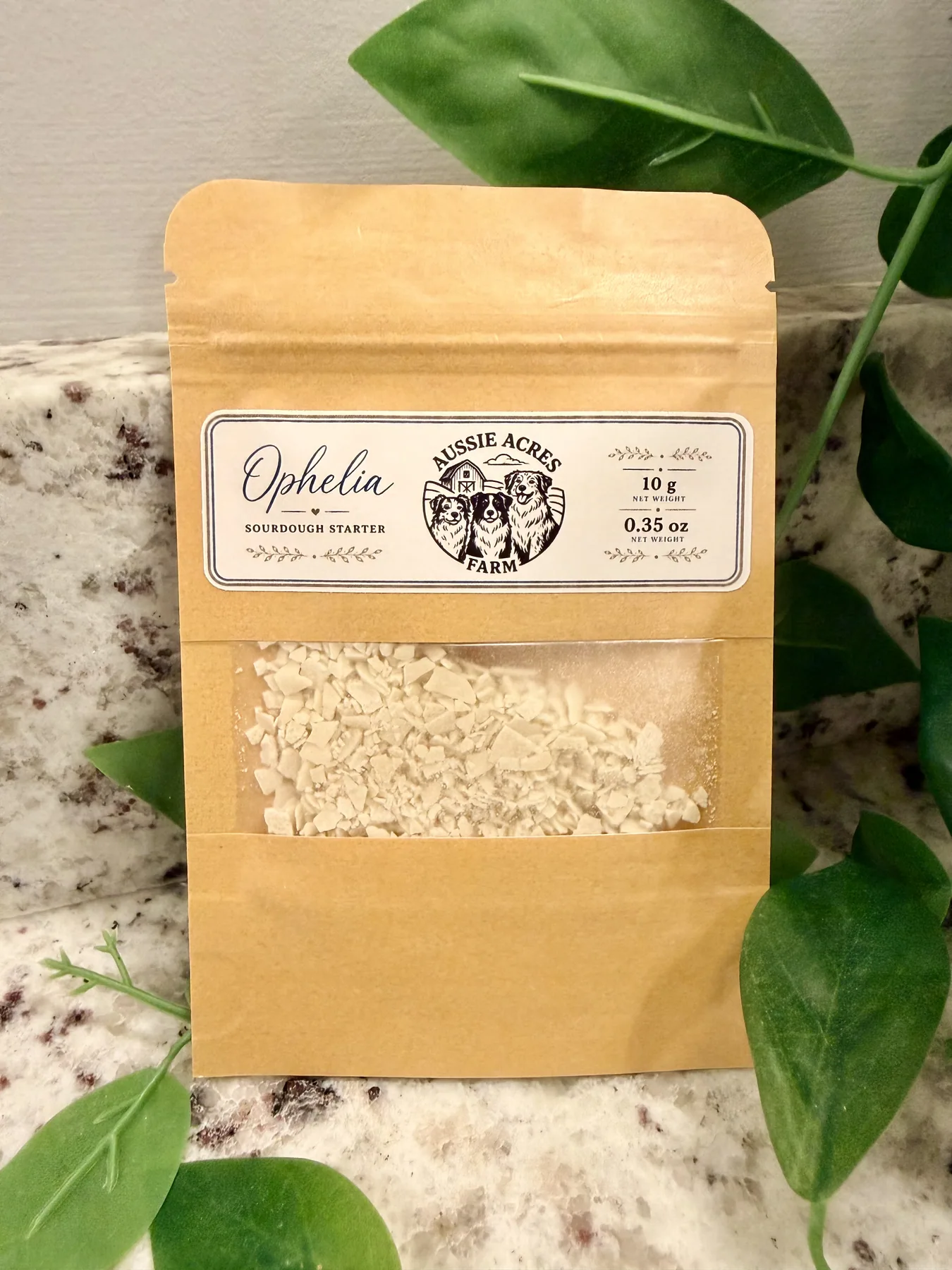
A starter is alive, but it does not need drama
Sourdough starter is flour, water, wild yeast, and helpful bacteria living together in a jar. Ophelia is our starter culture from the Aussie Acres kitchen. She needs food, warmth, and a little attention, but she does not need you to reorganize your whole life around her.
When Ophelia arrives
Ophelia will arrive packaged for shipping, not ready to live in that packaging forever. Move the starter into a clean jar with room to rise, feed it with flour and water, and leave it loosely covered at room temperature. If it seems cold, quiet, or a little sleepy from the trip, that is normal. Give it a feeding and some time to wake back up.
How to feed a sourdough starter
A simple feeding is equal parts starter, flour, and water by weight. For example, keep 25 grams of starter and feed it 25 grams of flour plus 25 grams of water. Stir it, scrape down the sides, mark the level, and wait. When it rises, smells pleasantly tangy, and looks bubbly, it is awake and useful.
How often to feed it
If Ophelia lives on the counter, feed her about once a day. If you only bake once in a while, keep her in the fridge and feed her weekly or a day before you plan to bake. Cold slows her down. Warmth wakes her up. That is most of the mystery.
Baking with starter
Use starter when it is active and bubbly, usually after it has risen well from a feeding. Bread is the classic use, but starter is also good for pancakes, waffles, biscuits, pizza dough, crackers, and any recipe where a little tang and fermentation make breakfast or supper better.
Making sourdough starter from scratch
You can make a starter from scratch by mixing flour and water, feeding it daily, and waiting for the wild yeast to settle in. It can take a week or two, and sometimes longer, before it is strong enough for reliable baking. Buying a starter like Ophelia simply gives you a head start with a culture that is already active.
What not to worry about
A little liquid on top, a slower day, or a sharper smell usually means the starter is hungry. Feed it and watch what it does. If you ever see fuzzy mold or bright pink or orange streaks, throw it out and start fresh. Otherwise, sourdough is more forgiving than people make it sound.